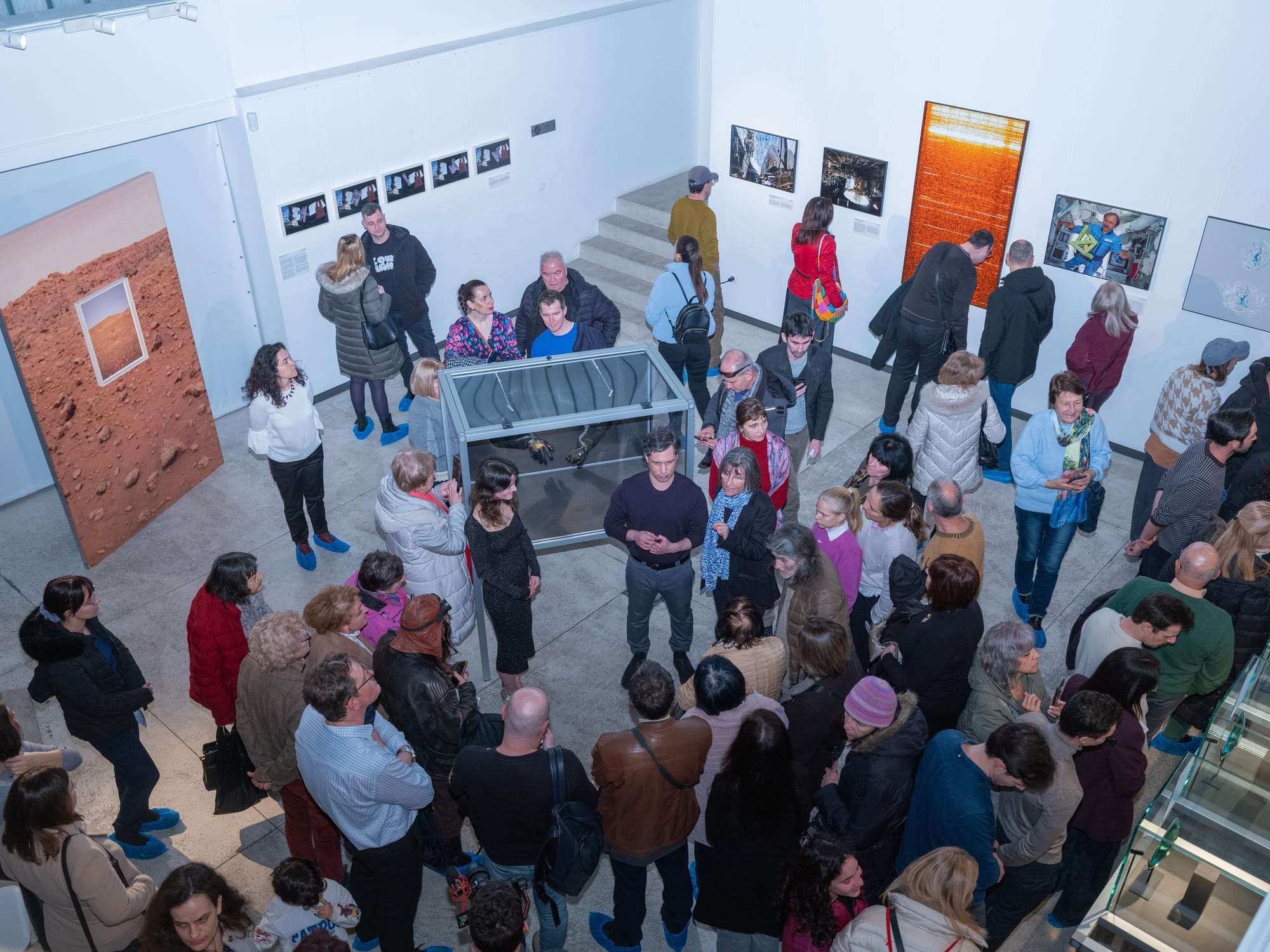
On the evening of 23 February 2026, the Episcopal Basilica of Philippopolis in Plovdiv welcomed over 180 guests to the opening of Book of the Moon — the first space art exhibition ever held in Bulgaria.
The event marked the public launch of a project that brings together contemporary art, space exploration and cultural heritage in one of Plovdiv's most significant archaeological venues. The response exceeded expectations: guests filled the basilica from the first hour, with strong interest from the cultural community, media and the general public alike.
An Exhibition at the Intersection of Art and Space
Book of the Moon is a collaboration between the Association Center for Projects Plovdiv (CPP) and the Moon Gallery Foundation (Netherlands) — an international platform dedicated to bringing art to the Moon as part of future lunar missions. The exhibition presents works selected for the Moon Gallery project: miniature artworks designed to travel aboard a lunar lander as part of humanity's return to the Moon.
Seeing these works displayed within the walls of the Episcopal Basilica of Philippopolis — a Roman-era archaeological site in the heart of Plovdiv — created an unusual and deliberate contrast: objects oriented toward the future, exhibited in a space that holds nearly two millennia of history.
Opening Programme
The evening opened with a live jazz performance by Miroslav Turiiski, one of Plovdiv's most celebrated jazz musicians. The opening address was delivered by Ivelina Kadiri of CPP, followed by a curator's tour led by the Moon Gallery Foundation team. The evening closed with a reception, with Turiiski's music continuing throughout.
Project Background
Book of the Moon is implemented under project reference BG-RRP-11.024-0037, financed by the Ministry of Culture of Bulgaria — NextGenerationEU, through the Recovery and Resilience Mechanism, and administered by the National Culture Fund of Bulgaria.
The exhibition remained open to the public from 23 February to 15 March 2026, free of entrance.
Photo by Viktor Kadiri